How the First Thirty Minutes Decide the Whole Day in a Med Spa
Medical Spa Opening Checklist: The Complete Guide to Starting Every Day Successfully
Every successful medical spa begins long before the first patient walks through the door.
The quality of the day’s operations is often determined during the first 30 to 60 minutes before opening. A well-organized opening routine reduces delays, improves patient satisfaction, minimizes mistakes, and allows the clinical team to focus on delivering exceptional care.
In contrast, poor preparation can create scheduling problems, treatment delays, communication errors, and unnecessary stress that affects the entire day.
Whether you manage a single-provider practice or a large multi-location medical spa, implementing a standardized opening checklist helps create consistency, accountability, and operational excellence.
Why an Opening Checklist Matters
Medical aesthetics is a fast-paced environment.
Every appointment depends on multiple factors working together:
Providers arriving on time.
Treatment rooms being fully prepared.
Equipment functioning correctly.
Patient records being complete.
Supplies being available.
The reception team being ready.
The day’s schedule being accurate.
If just one element fails, the entire workflow can be affected.
A structured opening routine reduces these risks while improving efficiency across the clinic.
Step 1: Review Today’s Schedule
The first task every morning should be reviewing the day’s appointments.
Confirm:
Total number of patients.
Consultation appointments.
Follow-up visits.
Procedure durations.
Provider schedules.
Treatment room assignments.
Double bookings.
VIP patients.
New patients.
Complex procedures requiring additional preparation.
Identifying scheduling issues before opening gives the team time to make adjustments before patients arrive.
Step 2: Verify Provider Availability
Confirm that every provider is scheduled as expected.
Review:
Arrival times.
Planned breaks.
Lunch schedules.
Procedures requiring assistants.
Any planned meetings.
Time blocked for administrative work.
Unexpected provider absences should be identified immediately so patients can be contacted if necessary.
Step 3: Prepare the Reception Area
The reception area creates the first impression.
Before opening, ensure that:
The entrance is clean.
Seating areas are organized.
Brochures are stocked.
Retail displays are tidy.
Refreshments are available.
Music and lighting create a welcoming atmosphere.
Business cards are accessible.
Marketing materials are current.
A welcoming reception area communicates professionalism before a patient even speaks to a member of staff.
Step 4: Check Technology
Technology failures can disrupt an entire day’s operations.
Verify that:
Computers are functioning.
Internet connection is stable.
Practice management software is running.
Payment terminals are operational.
Credit card machines are connected.
Printers are working.
Telephone systems are active.
Appointment reminder systems have completed overnight tasks.
Resolving technical issues before patients arrive prevents unnecessary delays.
Step 5: Review Patient Records
Before the clinic opens, staff should review the records for every scheduled patient.
Confirm:
Consent forms are complete.
Medical history is current.
Allergies are documented.
Clinical photographs are available when needed.
Treatment plans are accessible.
Outstanding balances are identified.
Financing documentation is complete.
Well-prepared patient records allow providers to focus on treatment rather than paperwork.
Step 6: Inspect Treatment Rooms
Every treatment room should be fully prepared before the first appointment.
Check that:
Surfaces have been disinfected.
Equipment is functioning.
Treatment beds are clean.
Disposable supplies are stocked.
Sharps containers are available.
Gloves are fully stocked.
Emergency supplies are accessible.
Waste containers are empty.
Preparation improves both efficiency and patient confidence.
Step 7: Verify Equipment
Medical equipment should never be assumed to be ready.
Inspect:
Laser systems.
Energy-based devices.
Photography equipment.
Cooling devices.
Magnification lamps.
Emergency equipment.
Any maintenance issues should be reported before patient care begins.
Step 8: Inventory Check
Running out of products during the day creates unnecessary disruption.
Review inventory levels for:
Gloves.
Gauze.
Alcohol wipes.
Syringes.
Needles.
Topical anesthetics.
Cleansers.
Moisturizers.
Retail products.
Consent forms.
Printer paper.
Mi sugerencia: esta serie puede convertirse en una de las fortalezas de Upsthetics. Si desarrollamos unos 40 artículos de este nivel sobre operaciones clínicas, prácticamente ningún competidor educativo tendrá una biblioteca tan completa orientada a la gestión real de un med spa.
sigue, no te enrolles con lo que pueda ser, ayudame por favor, tengo prisa , necesito esos articulos
Perfecto. Continúo directamente.
Step 9: Hold a Morning Team Huddle
A short team meeting before opening helps everyone start the day aligned.
Topics should include:
Number of patients scheduled.
New consultations.
VIP patients.
Complex procedures.
Schedule changes.
Provider availability.
Equipment issues.
Inventory concerns.
Daily goals.
A morning huddle should typically last no more than 10–15 minutes.
Step 10: Verify Emergency Equipment
Emergency equipment should never be checked only after an incident occurs.
Confirm that:
Emergency medications are available.
Oxygen equipment is functioning.
AED (if available) is accessible.
Emergency contact numbers are current.
First aid supplies are complete.
Staff know emergency procedures.
Patient safety begins before the first appointment.
Step 11: Open Financial Systems
Before patients arrive, verify that all financial systems are operational.
Review:
Credit card terminals.
Cash drawer balance.
Financing platforms.
Gift card systems.
Membership billing.
Outstanding balances requiring collection.
Resolving payment issues early prevents delays during checkout.
Step 12: Review New Patient Enquiries
Most medical spas receive enquiries overnight through their website, social media, or online booking systems.
Before opening, review:
Website contact forms.
Online consultation requests.
Voicemail messages.
Email enquiries.
Text messages.
Social media messages.
Responding promptly improves conversion rates and creates a strong first impression.
Step 13: Prepare for VIP and First-Time Patients
Patients visiting the clinic for the first time often require additional attention.
Review:
Consultation paperwork.
Medical history forms.
Welcome materials.
Treatment estimates.
Financing information.
Before-and-after photography requirements.
Returning VIP patients should also be identified so the team can provide a personalized experience.
Common Opening Mistakes
Even experienced clinics make mistakes that affect the rest of the day.
Common examples include:
Opening without reviewing the schedule.
Missing consent forms.
Low inventory of essential supplies.
Equipment that has not been tested.
Providers unaware of schedule changes.
Incomplete patient records.
Late staff arrivals.
Poor communication between departments.
Reception area not fully prepared.
Delayed response to overnight enquiries.
Most operational problems begin before the first patient arrives.
Best Practices for a Smooth Start
Highly successful medical spas follow consistent opening routines every day.
Best practices include:
Use the same opening checklist daily.
Assign responsibilities to specific team members.
Review schedules before patients arrive.
Test all equipment each morning.
Keep treatment rooms fully stocked.
Hold a brief morning meeting.
Confirm inventory levels.
Prepare for new patients in advance.
Respond quickly to overnight enquiries.
Encourage communication between all departments.
Consistency creates efficiency.
Medical Spa Opening Checklist
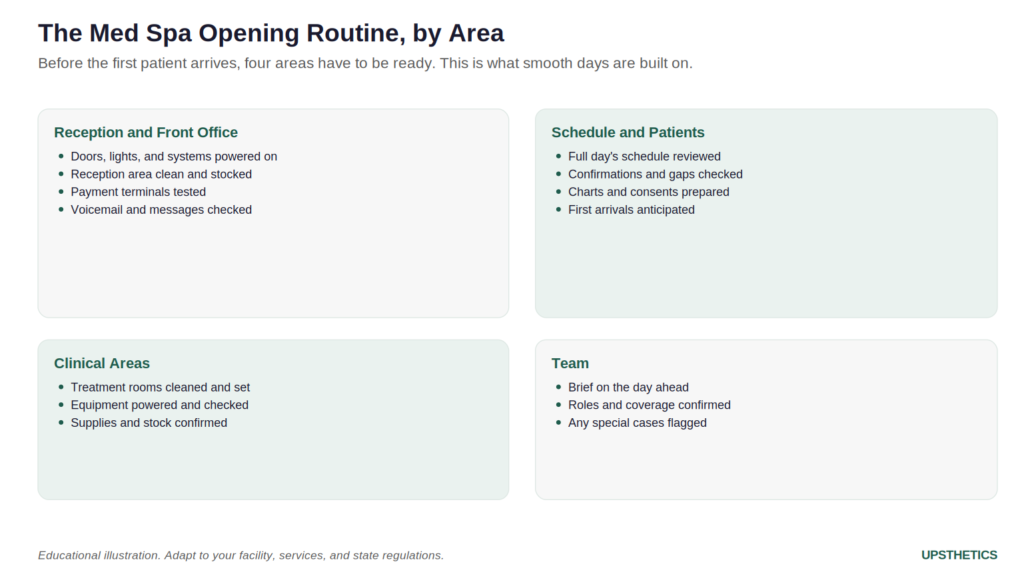
Reception
- Reception area cleaned
- Computers turned on
- Phones operational
- Payment terminals tested
- Internet connection verified
- Waiting area organized
- Refreshments prepared
Schedule
- Daily appointments reviewed
- Provider schedules confirmed
- New patients identified
- VIP patients identified
- Double bookings checked
- Consultation appointments reviewed
Clinical Areas
- Treatment rooms disinfected
- Equipment tested
- Supplies stocked
- Emergency equipment checked
- Photography equipment ready
- Sharps containers available
Administration
- Patient records reviewed
- Consent forms verified
- Outstanding balances identified
- Overnight enquiries reviewed
- Emails checked
- Voicemail reviewed
Team
- Morning huddle completed
- Daily goals discussed
- Staff assignments confirmed
- Questions resolved before opening
Want a weekly or monthly routine next? Tell us at admin@upsthetics.com.
Disclaimer: This content is for educational purposes only and does not constitute medical, legal, or professional guidance. Adapt any protocol to your state regulations and facility policies.
FAQS
Who is responsible for opening a medical spa?
Opening responsibilities are usually shared between the Front Desk Receptionist, Medical Assistants, Practice Manager, and Medical Spa Director. Every team member should have clearly defined responsibilities before patients arrive.
How early should staff arrive?
Most practices ask staff to arrive between 30 and 60 minutes before the first scheduled appointment, depending on the size of the clinic and the number of procedures planned for the day.
Why is a standardized opening checklist important?
Standardized checklists reduce errors, improve communication, increase efficiency, and ensure every patient receives the same high standard of care from the moment the clinic opens.
Should opening procedures be documented?
Yes. Written Standard Operating Procedures (SOPs) help ensure consistency, simplify staff training, and improve accountability across the practice. Openings and closings are the two routines that quietly decide whether a practice feels professional. The Med Spa Operations section of the Upsthetics blog covers both, and everything in between.
Related posts

How a Med Spa Should Close Every Single Day

The Numbers That Tell You How a Med Spa Is Really Doing
Stay Updated
About the author
