How a Med Spa Should Close Every Single Day

A successful day at a medical spa doesn’t end when the last patient leaves.
Some of the most important operational tasks take place after the clinic closes. Proper end-of-day procedures help protect patient information, maintain regulatory compliance, prepare the clinic for the following morning, and reduce unnecessary stress for the team.
Without a standardized closing process, small mistakes can quickly become major operational problems.
An organized closing routine ensures every day ends the same way, efficiently, consistently, and professionally.
Why a Closing Checklist Matters
Closing procedures are about much more than turning off the lights.
They help:
- Protect confidential patient information
- Reduce administrative errors
- Improve staff accountability
- Prepare the clinic for the following day
- Prevent equipment failures
- Reduce inventory shortages
- Improve operational consistency
Clinics with standardized closing procedures experience fewer disruptions and smoother morning operations.
- Step 1: Complete Patient Check-Out
Before closing, confirm that every patient has completed the checkout process.
Review:
- Payments collected
- Future appointments scheduled
- Receipts issued
- Product purchases completed
- Membership updates processed
- Follow-up instructions provided
- Outstanding balances documented
Every patient interaction should end professionally.
- Step 2: Review Tomorrow’s Schedule
Preparing for tomorrow starts today.
Verify:
- Provider schedules
- Appointment durations
- Consultation bookings
- Treatment room assignments
- Double bookings
- Equipment requirements
- New patients
- VIP patients
Identifying scheduling problems now avoids unnecessary calls the following morning.
- Step 3: Confirm Patient Records
Patient documentation should be complete before staff leave.
Check that:
- Clinical notes have been finalized
- Treatment photographs are uploaded
- Consent forms are complete
- Medical records are accurate
- Follow-up reminders have been scheduled
- Outstanding documentation has been assigned
Accurate records improve continuity of care and reduce compliance risks.
- Step 4: Process Payments
Financial tasks should never be left unfinished.
Confirm:
- Credit card transactions processed
- Cash drawer balanced
- Refunds documented
- Financing agreements completed
- Membership payments processed
- Daily revenue reconciled
Resolving payment issues before leaving reduces accounting errors.
- Step 5: Secure Patient Information
Protecting confidential information is a daily responsibility.
Before leaving:
- Lock patient records
- Log out of all software
- Lock computers
- Remove confidential paperwork from reception
- Store printed documents securely
- Verify backup procedures if required
Patient privacy remains essential even after business hours.
- Step 6: Clean and Reset Treatment Rooms
Every treatment room should be ready for the following morning.
Complete the following:
- Disinfect treatment beds
- Clean work surfaces
- Dispose of medical waste correctly
- Empty sharps containers if required
- Replace disposable supplies
- Organize instruments
- Restock gloves and consumables
A fully prepared room allows providers to begin the next day without delays.
- Step 7: Inspect Equipment
Before leaving, verify that equipment has been properly shut down.
Review:
- Laser systems
- Energy devices
- Photography equipment
- Magnifying lamps
- Cooling systems
- Computers
- Sterilization equipment
- Report any maintenance issues immediately
- Step 8: Inventory Check
Closing is an ideal time to identify products that require replenishment.
Review:
- Gloves
- Gauze
- Needles
- Syringes
- Cleansers
- Topical anesthetics
- Retail skincare
- Office supplies
- Consent forms
- Printer paper
Small inventory checks prevent treatment interruptions.
- Step 9: Organize the Reception Area
Before leaving:
- Clean reception desks
- Organize brochures
- Remove clutter
- Empty trash bins
- Prepare refreshments for the following day
- Tidy waiting areas
- Restock business cards
Patients should enter a clean, welcoming environment every morning.
- Step 10: Check Emails and Messages
Before closing, review all communication channels.
Confirm:
- Emails answered
- Voicemail reviewed
- Website enquiries acknowledged
- Social media messages reviewed
- Appointment requests processed
- Urgent patient messages forwarded
Fast communication improves patient satisfaction.
Common Closing Mistakes
Many operational problems begin because teams rush to leave.
Common mistakes include:
- Leaving incomplete patient records
- Forgetting to reconcile payments
- Not confirming tomorrow’s appointments
- Leaving treatment rooms unprepared
- Failing to restock supplies
- Computers left logged in
- Equipment not shut down correctly
- Outstanding patient enquiries ignored
- Reception left disorganized
- Inventory shortages not reported
Small oversights often become major problems the next morning.
Best Practices
Successful medical spas develop consistent closing routines.
Best practices include:
- Assign responsibilities clearly
- Follow the same checklist every day
- Finish documentation before leaving
- Balance financial records daily
- Restock treatment rooms immediately
- Review tomorrow’s schedule
- Secure all patient information
- Leave every clinical area prepared
- Consistency creates efficiency
Printable Medical Spa Closing Checklist
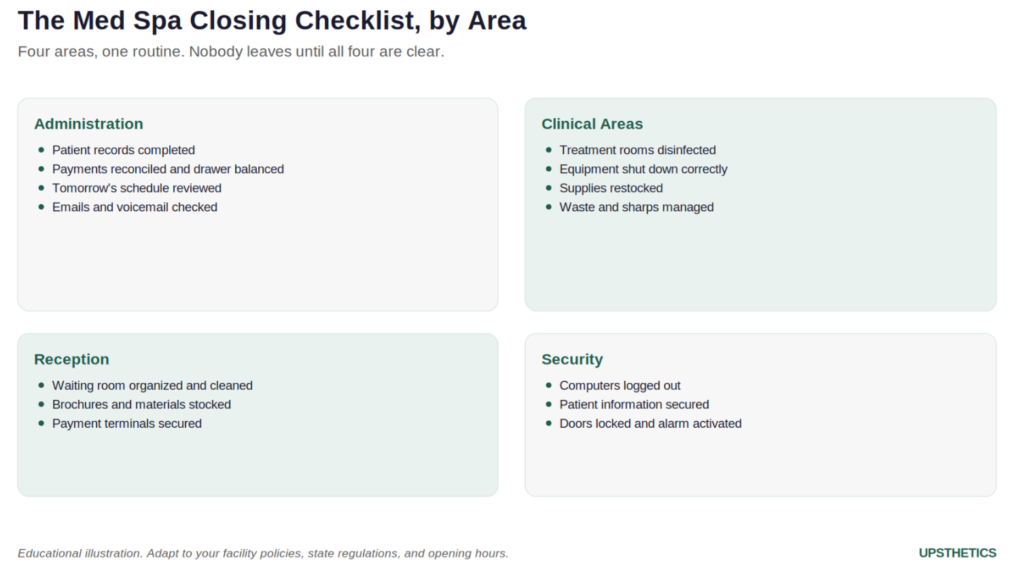
Administration
- Patient records completed
- Payments reconciled
- Cash drawer balanced
- Tomorrow’s schedule reviewed
- Emails answered
- Voicemail checked
Clinical Areas
- Treatment rooms disinfected
- Equipment shut down
- Supplies restocked
- Waste removed
- Sharps managed correctly
Reception
- Waiting room organized
- Reception cleaned
- Brochures stocked
- Payment terminals secured
Security
- Computers logged out
- Patient information secured
- Doors locked
- Alarm activated
- Lights turned off where appropriate
Want an opening checklist or a weekly routine next? Tell us at admin@upsthetics.com.
Disclaimer: This content is for educational purposes only and does not constitute medical, legal, or professional guidance. Adapt any protocol to your state regulations and facility policies.
FAQS
Who is responsible for closing a medical spa?
Closing responsibilities are typically shared among the Front Desk team, Aesthetic Medical Assistants, providers, the Practice Manager, and the Medical Spa Director. Each team member follows designated end-of-day responsibilities to ensure patient records are complete, treatment rooms are prepared, equipment is secured, and the clinic is ready for the next business day.
Why should documentation be completed before leaving?
Completing documentation immediately after patient care improves accuracy, reduces the risk of missing information, supports continuity of care, and helps practices meet legal, regulatory, and insurance documentation requirements.
Should treatment rooms be fully restocked every evening?
Yes. Restocking treatment rooms at the end of the day ensures providers can begin seeing patients without unnecessary interruptions. Clinics typically replenish gloves, gauze, syringes, sharps containers, disinfectants, and other commonly used supplies as part of the closing routine.
How long should closing procedures take?
The time required varies depending on the size of the practice, patient volume, and the number of treatment rooms. Most medical spas complete their closing checklist within 20 to 45 minutes, although larger multi-provider practices may require additional time.
Why is a standardized closing checklist important?
A standardized checklist helps ensure that critical tasks are completed consistently every day. It reduces the risk of missed documentation, improperly cleaned treatment rooms, inventory shortages, security issues, and compliance problems while promoting accountability across the team.
What equipment should be checked before closing?
Depending on the clinic, staff may verify that lasers, energy-based devices, treatment chairs, refrigerators, computers, sterilization equipment, and other medical devices are properly shut down, cleaned, secured, or left operating according to manufacturer recommendations and clinic protocols.
Should controlled substances and prescription products be secured every evening?
Yes. Any controlled medications, prescription products, or restricted medical supplies should be stored and secured according to applicable regulations, clinic policies, and state requirements before staff leave the facility.
Why should inventory be checked at the end of the day?
Daily inventory checks help identify low stock levels before they affect patient care. Detecting shortages early allows clinics to reorder supplies, reduce waste, and avoid treatment delays caused by missing products or consumables.
What cleaning tasks are typically performed during closing?
Closing cleaning procedures often include disinfecting treatment beds, countertops, procedure trays, equipment surfaces, door handles, and other high-touch areas, as well as disposing of clinical waste and preparing rooms for the following day’s appointments.
What should happen if staff discover a problem during closing?
Any equipment malfunction, inventory shortage, documentation error, safety concern, or maintenance issue should be reported according to the clinic’s internal procedures. Prompt communication allows problems to be addressed before patient care is affected.
Who performs the final security check before leaving?
Many practices assign the final security inspection to the Practice Manager, Medical Spa Director, or another designated staff member. This final walkthrough typically includes confirming that treatment rooms are secure, alarms are activated, doors are locked, lights are turned off where appropriate, and sensitive areas have been properly secured.
Why is the closing routine important for patient safety?
An organized closing routine helps maintain a clean clinical environment, ensures equipment is ready for safe operation the following day, reduces the likelihood of documentation errors, and supports consistent, high-quality patient care across every clinic session. Consistency at closing is what makes mornings calm and audits painless. Find more practical operations content in the Med Spa Operations section of the Upsthetics blog.
Related posts

How the First Thirty Minutes Decide the Whole Day in a Med Spa

The Numbers That Tell You How a Med Spa Is Really Doing
Stay Updated
About the author
