Chemical peels: benefits, types, recovery, risks, and what to expect

Chemical peels have been used in dermatology and aesthetic medicine for decades to improve skin texture, reduce pigmentation, soften wrinkles, and treat acne-related concerns.
Despite their popularity, chemical peels are often misunderstood. Many people assume they simply “remove the top layer of skin,” while others believe they are painful, unsafe, or only appropriate for severe skin damage.
In reality, chemical peels encompass a wide range of procedures that vary considerably in depth, recovery time, indications, and expected outcomes.
When appropriately selected and performed by qualified professionals, chemical peels can become an effective component of a comprehensive skin rejuvenation plan.
What Is a Chemical Peel?
A chemical peel is a controlled skin resurfacing procedure in which one or more chemical solutions are applied to the skin to produce controlled exfoliation and stimulate regeneration.
Depending on the formulation and depth of penetration, a peel may affect only the outermost layer of the epidermis or extend into deeper portions of the skin.
The ultimate goal is to improve overall skin quality by encouraging replacement of damaged surface cells with healthier tissue.
How Do Chemical Peels Work?
Chemical peels work by producing a controlled injury to the skin.
This process initiates several biological responses:
- Removal of damaged epidermal cells
- Increased epidermal turnover
- Stimulation of new cell formation
- Dermal remodeling
- Improved collagen organization
- Reduction of irregular pigmentation
- Smoother skin texture
As healing occurs, patients often notice healthier, brighter and more even-looking skin.
Types of Chemical Peels
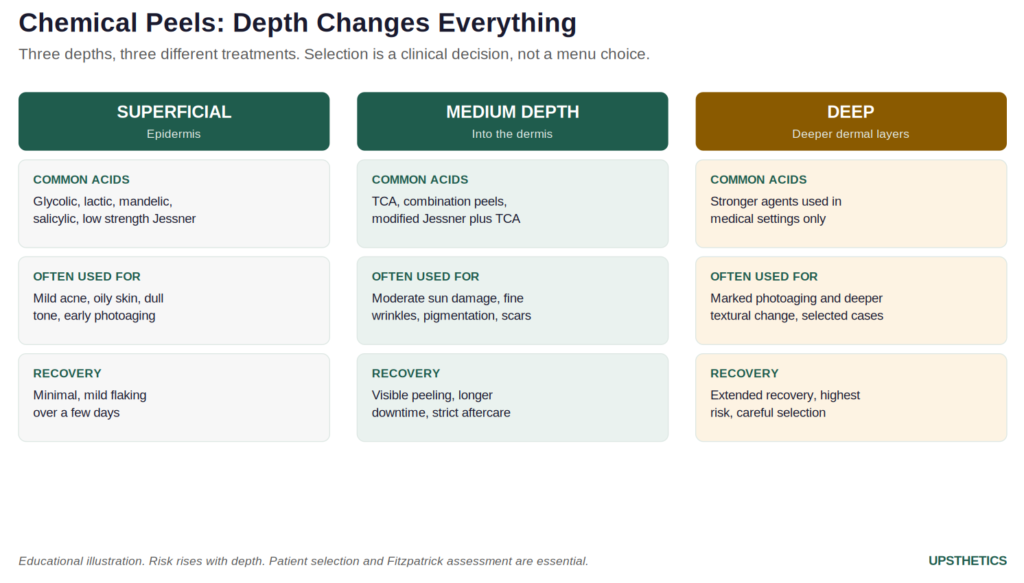
Chemical peels are generally classified according to their depth of penetration.
Superficial Peels
Superficial peels affect primarily the epidermis.
Common acids include:
- Glycolic acid
- Lactic acid
- Mandelic acid
- Salicylic acid
- Low-strength Jessner’s solution
These peels usually involve minimal downtime and are commonly performed as a series of treatments.
They are frequently used for:
- Mild acne
- Oily skin
- Early photoaging
- Uneven skin tone
- Dull complexion
Medium-Depth Peels
Medium peels penetrate deeper into the skin.
Examples include:
- Trichloroacetic Acid (TCA)
- Combination peels
- Modified Jessner + TCA protocols
They may improve:
- Moderate sun damage
- Fine wrinkles
- Pigmentation disorders
- Acne scars
- Actinic changes
Recovery is generally longer than superficial peels.
Deep Peels
Deep peels penetrate into the reticular dermis.
Historically these have included phenol-based peels.
Deep peels may produce dramatic improvement but involve:
- Longer recovery
- Greater risk
- More extensive aftercare
- Careful patient selection
These procedures are performed far less frequently today due to advances in laser technology and other resurfacing techniques.
Common Ingredients Used in Chemical Peels
Different acids produce different clinical effects.
Glycolic Acid
Derived from sugar cane.
Often used for:
- Fine lines
- Photoaging
- Hyperpigmentation
- General skin rejuvenation
Salicylic Acid
A beta hydroxy acid.
Particularly useful for:
- Oily skin
- Acne-prone skin
- Blackheads
- Enlarged pores
Because it is lipophilic, salicylic acid penetrates oily follicles effectively.
Lactic Acid
A gentler alpha hydroxy acid.
Often selected for:
- Sensitive skin
- Dry skin
- Mild pigmentation
- Early aging
Mandelic Acid
Known for its larger molecular size.
Often chosen for:
- Sensitive skin
- Acne
- Skin of color
- Mild pigmentation
It penetrates more slowly than glycolic acid.
Trichloroacetic Acid (TCA)
TCA is commonly used in medium-depth peeling.
Depending on concentration, it may improve:
- Wrinkles
- Acne scars
- Sun damage
- Pigmentation
Higher concentrations require greater expertise and carry higher risks.
Jessner’s Solution
Traditionally contains:
- Salicylic acid
- Lactic acid
- Resorcinol (or modified alternatives)
Frequently used alone or before TCA.
Benefits of Chemical Peels
Chemical peels may provide multiple improvements.
1. Brighter Skin
Removal of damaged surface cells often results in:
- Increased radiance
- More even complexion
- Fresher appearance
2. Improvement in Fine Lines
Repeated treatments may soften superficial wrinkles by promoting epidermal renewal and dermal remodeling.
Chemical peels cannot replace surgical lifting procedures.
3. Acne Treatment
Certain peels help reduce acne by:
- Exfoliating follicles
- Reducing excess oil
- Improving comedonal acne
- Supporting acne management programs
4. Improvement of Hyperpigmentation
Appropriately selected peels may improve:
- Post-inflammatory hyperpigmentation
- Sun spots
- Melasma (selected cases)
- Uneven skin tone
Treatment should always be individualized, especially in darker Fitzpatrick skin types.
5. Smoother Skin Texture
Patients frequently report:
- Softer skin
- Reduced roughness
- More refined texture
6. Reduction of Sun Damage
Photoaged skin often responds well to carefully selected peeling protocols.
What Happens During a Chemical Peel?
Most professional treatments follow similar stages.
Consultation
The provider evaluates:
- Medical history
- Skin type
- Fitzpatrick classification
- Current skincare
- Previous procedures
Contraindications
- Patient expectations
Skin Preparation
The skin is cleansed and degreased before the peel is applied.
Application
The peeling solution is applied systematically.
Patients commonly describe:
- Warmth
- Tingling
- Mild burning
- Temporary discomfort
These sensations usually resolve quickly.
Neutralization
Some peels require neutralization.
Others are self-neutralizing and continue acting until removed or exhausted.
Post-Treatment Care
The provider reviews aftercare instructions before the patient leaves.
Recovery
Recovery depends largely on peel depth.
Patients may experience:
- Redness
- Tightness
- Dryness
- Flaking
- Peeling
- Temporary sensitivity
Superficial peels often recover within several days.
Medium-depth peels generally require longer healing.
Possible Risks
Although generally safe when appropriately performed, chemical peels carry risks.
Potential complications include:
- Infection
- Prolonged redness
- Hyperpigmentation
- Hypopigmentation
- Scarring
- Delayed healing
- Persistent irritation
- Allergic reactions
Risk increases with:
- Improper patient selection
- Excessive peel depth
- Poor aftercare
- Sun exposure during healing
Contraindications
Chemical peels may need to be postponed in patients with:
- Active infection
- Open wounds
- Active eczema
- Severe rosacea flare
- Recent isotretinoin therapy (individualized assessment)
- Pregnancy (depending on peel type)
- Known allergy to peel ingredients
Chemical Peels and Skin of Color
Chemical peels can often be performed safely in darker skin tones.
However, darker Fitzpatrick skin types have a greater risk of:
- Post-inflammatory hyperpigmentation
- Uneven pigmentation
For these patients, careful acid selection, conservative treatment protocols, and strict sun protection are especially important.
Chemical Peel Aftercare
Patients are commonly advised to:
- Avoid picking peeling skin
- Wear broad-spectrum sunscreen daily
- Use gentle cleansers
- Avoid exfoliating products temporarily
- Avoid retinoids until instructed
- Keep the skin moisturized
Avoid excessive heat and sweating during early recovery.
Proper aftercare significantly influences treatment outcomes.
Which treatment should we break down next? Write to admin@upsthetics.com.
Disclaimer: This content is for educational purposes only and does not constitute medical advice, legal advice, or professional guidance. Peel selection and depth are clinical decisions made by qualified licensed professionals.
FAQS
Are chemical peels painful?
Most superficial peels produce temporary tingling or burning rather than significant pain.
How many treatments are needed?
Treatment plans vary according to the indication, peel type, and patient goals. Many patients benefit from a series of superficial peels.
Can chemical peels remove acne scars?
They may improve certain superficial acne scars, although deeper scars often require combination treatments.
Can darker skin receive chemical peels?
Yes, but treatment selection should be individualized to minimize the risk of pigmentation changes.
When will I see results?
Many patients notice brighter skin within days, while improvements in pigmentation, texture, and fine lines generally develop gradually after multiple treatments. Peels are one of the most misunderstood treatments in aesthetics, mostly because depth changes everything. Find more evidence informed articles in the Injectables & Treatments section of the Upsthetics blog.
Related posts
RF Microneedling and Traditional Microneedling, How They Really Differ
Crosslinked vs. non-crosslinked hyaluronic acid: key differences in structure, skin quality, and volume support
Stay Updated
About the author
