Compromised skin barrier: how to identify it before any aesthetic treatment
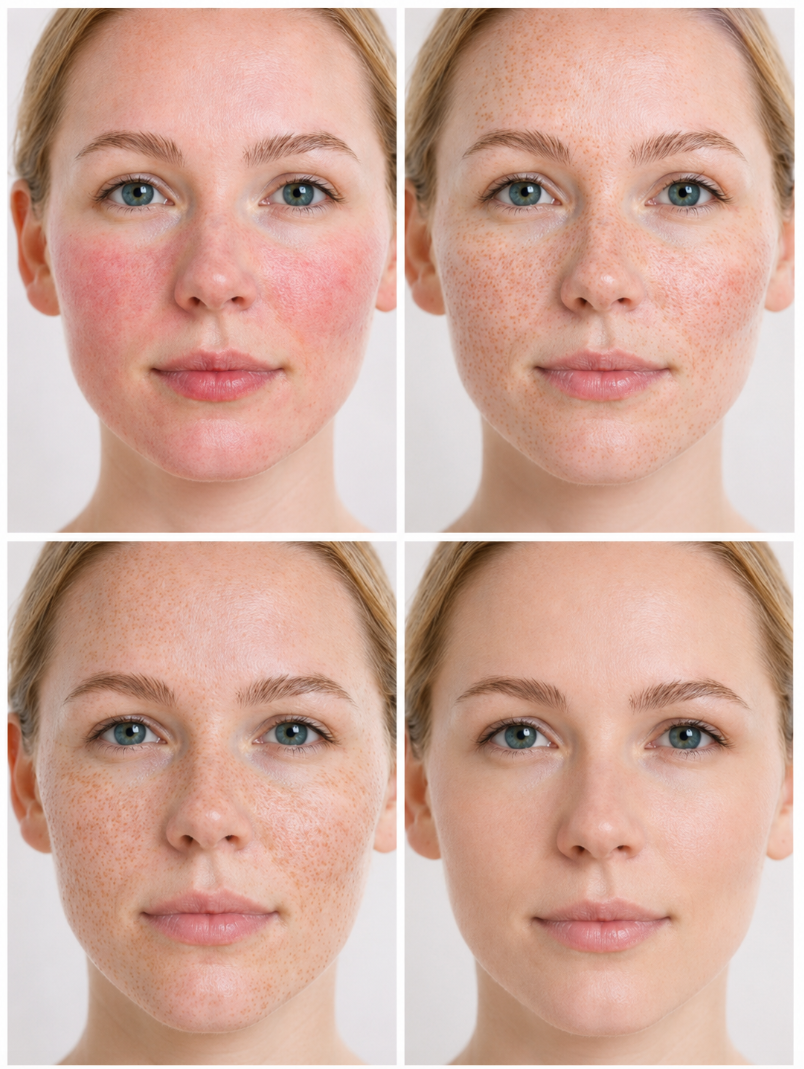
- A compromised skin barrier is one of the most frequent and most preventable causes of poor outcomes in aesthetic treatments, and it is not always visible at first glance.
- When the barrier is disrupted, transepidermal water loss increases and the skin becomes reactive, unstable, and less tolerant of standard protocols.
- The most common causes today are overuse of active ingredients, treatments scheduled too close together, and layering multiple actives at once.
- Identification relies on three sources of information: what the skin shows, what the patient reports, and how the skin has responded to previous treatments.
- For estheticians and aesthetic medical assistants, recognizing early signs of barrier compromise supports safer treatment planning and protects both the patient and the practice.
It is a common scenario in aesthetic practice: a patient arrives for a routine treatment, often a peel or microneedling session, and at first glance the skin appears manageable. A subtle shine, mild redness, or a history of products stinging more than usual can be easy to dismiss when the schedule is full and the treatment is booked.
In many cases, those small signals point to a compromised skin barrier. Proceeding without identifying it is one of the most frequent causes of poor clinical outcomes in modern aesthetic practice, and one of the most avoidable.
What the skin barrier is and what happens when it is compromised
The skin barrier, primarily the outermost layer of the epidermis, protects the body from external stressors and regulates hydration. A healthy barrier keeps irritants and microorganisms out while keeping water in.
When the barrier is disrupted, that balance breaks down. Transepidermal water loss, often abbreviated as TEWL, increases, meaning the skin loses moisture faster than it can retain it. At the same time, the skin becomes more permeable to irritants. The practical result is skin that is reactive, dehydrated, and unstable, even when it does not look dramatically damaged.
This is a key point for professionals: a compromised barrier is not always visible on first inspection. Skin can appear relatively normal in the treatment room and still be functionally fragile. That is why assessment cannot rely on appearance alone.
Why barrier damage is increasingly common
Barrier compromise is showing up more often in aesthetic settings, and the reasons are largely behavioral rather than clinical.
Overuse of active ingredients
Exfoliating acids and retinoids are more accessible than ever, and many patients use several at once, often daily, without professional guidance. Frequent use of strong actives is one of the main drivers of over-exfoliation and cumulative barrier stress.
Treatments scheduled too close together
Peels, microneedling, and other resurfacing treatments each create a controlled recovery demand on the skin. When intervals between procedures are too short, that demand becomes cumulative, and the skin never fully stabilizes between sessions.
Product layering
Combining multiple actives in the same routine, for example an exfoliating acid, a retinoid, and a high strength vitamin C, multiplies irritation potential. Each product may be reasonable on its own; together they can overwhelm the barrier.
How to identify a compromised skin barrier
Reliable identification draws on three sources of information: what the professional can see, what the patient reports, and how the skin has behaved over time.
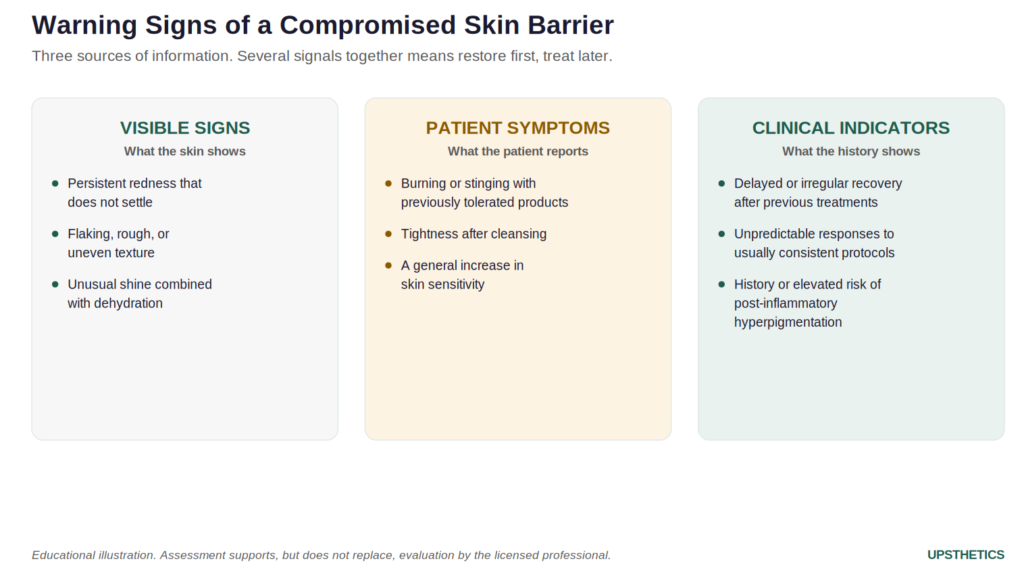
Visible signs
- Persistent redness that does not settle
- Flaking, rough, or uneven texture
- An unusual shine combined with dehydration, sometimes described as tight but oily looking
Patient reported symptoms
- Burning or stinging when applying products that were previously well tolerated
- Tightness after cleansing
- A general increase in skin sensitivity
Clinical indicators
- Delayed or irregular recovery after previous treatments
- Unpredictable responses to protocols that usually behave consistently
- Elevated risk or history of post-inflammatory hyperpigmentation
When several of these signals appear together, the safest working assumption is that barrier function is compromised until proven otherwise.
Common mistakes in aesthetic practice
Treating without assessment
Skipping a structured evaluation and moving straight to the booked treatment is the root error behind most barrier related complications. The booking is not the indication; the skin is.
Over-exfoliating
Combining multiple exfoliation methods, chemical and mechanical, in the same plan accelerates barrier damage instead of improving results.
Following trends instead of indications
Applying treatments because they are popular, rather than because the skin in front of you indicates them, increases the likelihood of complications.
Ignoring patient feedback
Comments like “everything burns lately” or “my skin feels tight all the time” are early warning signs, not small talk. Patient reported symptoms often appear before visible signs do.
Why this matters clinically and commercially
The consequences of treating over a compromised barrier show up in two places: the skin and the business.
On the clinical side, the risks include chronic sensitivity, persistent redness, prolonged recovery, and a higher likelihood of post-inflammatory hyperpigmentation, particularly in medium and deeper skin tones.
On the business side, poor outcomes translate into loss of patient trust, negative reviews, and reduced retention. A patient who reacts badly to a treatment rarely blames their own product routine; they associate the experience with the practice. Protecting the barrier protects the practice.
What to do instead
When barrier compromise is identified or suspected, the responsible sequence is straightforward:
- Prioritize barrier repair. Shift the focus to restoring barrier function with gentle, hydration supportive care before any advanced treatment.
- Simplify the routine. Reduce the number of active products, remove unnecessary steps, and give the skin fewer variables to react to.
- Delay aggressive treatments. Postponing a peel or microneedling session until the skin stabilizes is not a lost appointment; it is correct sequencing.
- Educate the patient. Explaining why the plan is changing improves compliance, manages expectations, and builds the kind of trust that keeps patients long term.
The role of estheticians and aesthetic medical assistants
In clinical environments, estheticians and aesthetic medical assistants are often the first to observe the skin closely and the first to hear how it has been behaving at home. Within their scope of practice, their role includes:
- Identifying early signs of barrier compromise during intake and preparation
- Flagging concerns before an unsuitable treatment proceeds
- Supporting adjusted preparatory protocols when the plan changes
- Reinforcing patient education around product use and treatment spacing
They do not diagnose skin conditions or make final treatment decisions; those belong to the licensed professionals responsible for the treatment plan. But their observations are frequently what makes safe decision making possible. Because scope of practice varies by state, these responsibilities should always align with applicable regulations and the structure of each practice.
Sources and references
- American Academy of Dermatology. Skin care and skin barrier health resources.
- National Institutes of Health. Published research on transepidermal water loss and epidermal barrier function.
Solid fundamentals make better professionals. Visit the Skin Science section of the Upsthetics blog for more evidence informed articles on how skin works and how to care for it in professional settings.
Is there a skin topic you want us to break down next? Tell us at admin@upsthetics.com.
Disclaimer: This content is for educational purposes only and does not constitute medical advice, legal advice, or professional guidance.
FAQS
Can a compromised skin barrier be treated over?
It should not be. Treating over a compromised barrier increases the risk of adverse reactions, delayed recovery, and pigmentation issues. Restoring barrier function first is the safer and more effective sequence.
How long does it take for a skin barrier to recover?
There is no universal timeline. Recovery depends on the degree of compromise, the products being used, and individual skin characteristics. Mild cases may stabilize within days to a few weeks, while more significant compromise can take longer.
Can patients have a compromised barrier without knowing it?
Yes. Many patients interpret burning, tightness, or reactivity as normal, or as a sign that products are working. Part of the professional’s role is helping patients recognize these as warning signs rather than expected sensations.
Is a compromised skin barrier the same as sensitive skin?
No. Sensitive skin is a general tendency to react; a compromised barrier is a functional state that can affect any skin type, including skin that is not usually sensitive. The distinction matters because a compromised barrier is typically recoverable with the right approach.
Who decides whether a treatment should be postponed?
The licensed professional responsible for the treatment plan. Estheticians and aesthetic medical assistants contribute observations and flag concerns, but final clinical decisions rest with the appropriate licensed provider under state regulations.
Related posts

The Skin Microbiome and Why Aggressive Treatments Backfire
Skincare ingredients that should not be combined: a clinical safety guide for aesthetic practice
Stay Updated
About the author
